

When to Bet on Channel Partners Early
How to support partnerships at the seed stage without stalling direct sales.

DEAR STAGE 2: We have our first few channel partners showing promise, but I’m not sure how to resource them without taking away from direct sales. What’s the right way to build out partnerships at the seed stage? ~DEAR NEW TO PARTNERING
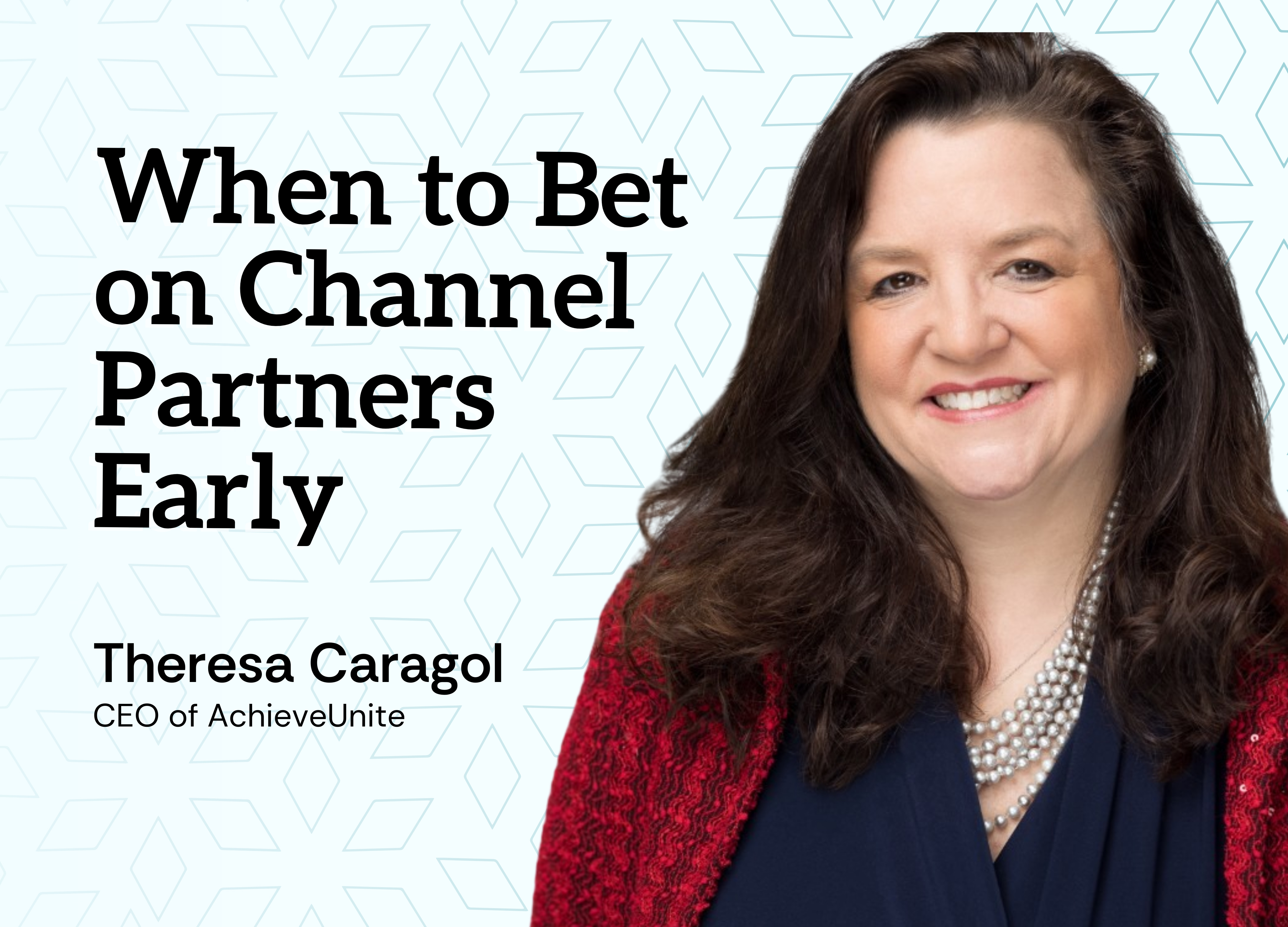
DEAR NEW TO PARTNERING: The tension you’re feeling is real. When you’re early, and every dollar counts, supporting indirect channels can feel like a gamble, especially if it threatens to pull energy and resources from your direct sales engine. But when partnerships are approached with intention, even a lean partner motion can become a force multiplier.
I had the chance to discuss this with Theresa Caragol, founder and CEO of AchieveUnite and a long‑time ecosystem leader who has spent decades helping companies design, launch, and scale successful partnership strategies across technology, services, and global markets. Her perspective is grounded in one core belief: partnerships are not an add‑on. They are a deliberate go‑to‑market choice. Here’s how she thinks about laying the right foundation for partnerships early on:
Not All Partners Are Equal. Treat Them Accordingly
The first mistake early‑stage companies make is engaging partners without a clear strategy. Before you invest time, enablement, or executive attention, you need clarity on three things:
Your ideal customer profile
Your ideal partner profile
The business motion you need from those partners (influence, co‑sell, services, revenue, or market access)
The degree to which you get this strategy right upfront is directly tied to the success you’ll see down the road (we’re talking 12-18 months later).
Included in that strategy must be a clear answer to a question many companies overlook: What’s in it for the partner? There is a value proposition for the customer, and there is a distinct business proposition for the partner. If the partner cannot clearly articulate why working with you helps their business, momentum will stall.
Only after this foundation is in place should you begin partner segmentation. Segmentation is not a nice‑to‑have or a side exercise. It is how you decide where to place your limited bets. Leading indicators of potential and indicators of performance must be defined, measured, and understood across the organization. Segmentation and success metrics go hand in hand.
Partnering is not a sales initiative
This is where many seed‑stage companies get tripped up. Partnering is not a sales experiment or a side channel; it is a fundamental way the company goes to market.
When partnering is treated as “sales versus channel,” internal conflict follows. When partnering is aligned as a go‑to‑market motion across leadership, companies are significantly more successful over time. Organizations that align early avoid the friction that slows growth and dilutes trust between teams.
Every executive should understand how partnerships fit into the company’s strategy from the beginning.
Build the Strategy and Playbook Early
You do not need a large partner program at the seed stage, but you do need a repeatable motion. Theresa recommends documenting learnings as you go:
Who is the buyer?
Where does the partner add influence or access?
What does a strong introduction or co‑sell motion look like?
What behaviors consistently move deals forward?
Ownership matters here. Someone must be accountable for the partner motion, or sellers must be enabled from the start to leverage partners effectively. In today’s era of influence‑driven selling, teaching sellers how to work with partners is often the stronger path.
Balance Short and Long Term Goals
Every company should have a partner strategy from the onset. That strategy does not need to be complex, but it does need to be intentional.
For some early‑stage companies, the partner bet may focus on influence. For others, it may be revenue, services, or supplier leverage. The key is to place two to three deliberate bets where partnerships can act as a force multiplier.
In a world driven by digital, social, and ecosystem influence, direct sales and direct marketing alone cannot reach every buyer. Partners extend reach, credibility, and context, but only when they are chosen and engaged deliberately.
This is why success should be evaluated using both leading indicators (engagement, influence, access) and lagging indicators (revenue). Remember: revenue confirms success, but it rarely tells the whole story early on.
From Direct Sales to Leverage Selling
We are moving from a world dominated by pure direct sales to one defined by co‑selling and leverage. The most successful AEs are those who understand how to use partnerships for influence, new logos, service wrap, and long‑term stickiness. Alignment is the key. Compensation, engagement timing, and clarity around who leads and who supports at each stage of the sales cycle must be explicit.
Misalignment creates confusion. Alignment creates leverage.
Partnerships at the seed stage are less about scale and more about leverage. If you place a few intentional bets early, validate them with both leading and lagging indicators, and document what works, you will know exactly when it’s time to double down.
And when that moment comes, you’ll be scaling from clarity, not guesswork.
Until next week!
i always found that the adage of "help that person sell more of their stuff with your stuff" works brilliantly in terms of reframing how you can work with Partners. Whether you are a software vendor working a PS partner or the other way round having as part of your channel DNA the answering of that question drives the right behaviour.