

Turning First Meetings Into Real Pipeline
Tactical ways to improve early-stage funnel conversion

DEAR STAGE 2: Our reps are booking plenty of first calls, but we’re struggling to convert first meetings into real pipeline. How can we diagnose where things are breaking down and get the team back on track to have impact in Q4? ~PIPELINE PAIN
DEAR PIPELINE PAIN: Your team is already doing the hard work of getting prospects on the calendar - let’s count that as a win! But something is preventing those conversations from turning into qualified opportunities. Most likely this is going to come down to training and enablement on ICP, messaging and basic sales tactics.
I turned to two of our LPs, Justin Ryburn and Tito Bohrt, who have deep expertise helping companies improve their early-stage funnel conversion. Here’s how they suggest approaching the problem:
1: Collect Data Before Making Changes
Justin stresses the importance of starting with evidence before jumping into solutions: “First thing you need to do is get some data on why this is happening. If you have Gong, run the transcripts of first calls through an LLM and have it summarize what is going wrong. If not, have your reps provide structured feedback on where the disconnect was.”
This type of analysis helps determine where the issue lies.The most common culprits to check for:
Is the meeting set with companies in your ICP?
Is the right person on the phone? Confirm the buyer persona
Is the messaging correct/resonating?
Are the reps positioning the use cases well?
When does the prospect disengage or realize the product isn’t a fit?
Without data, it’s just guesswork.
Pro Tip: Incentives drive behavior. Justin advises doing a review of comp plans in parallel. A common mistake is tying SDR or marketing compensation solely to # of meetings booked. “This celebrates that N number of meetings were booked while the reps are complaining they have a bunch of useless calls on their calendar.” Instead, we would recommend aligning demand gen functions with sales by tying comp to qualified pipeline and revenue contribution. More info on that here if you think comp could be contributing to this challenge!
Step 2: Define and Inspect Exit Criteria
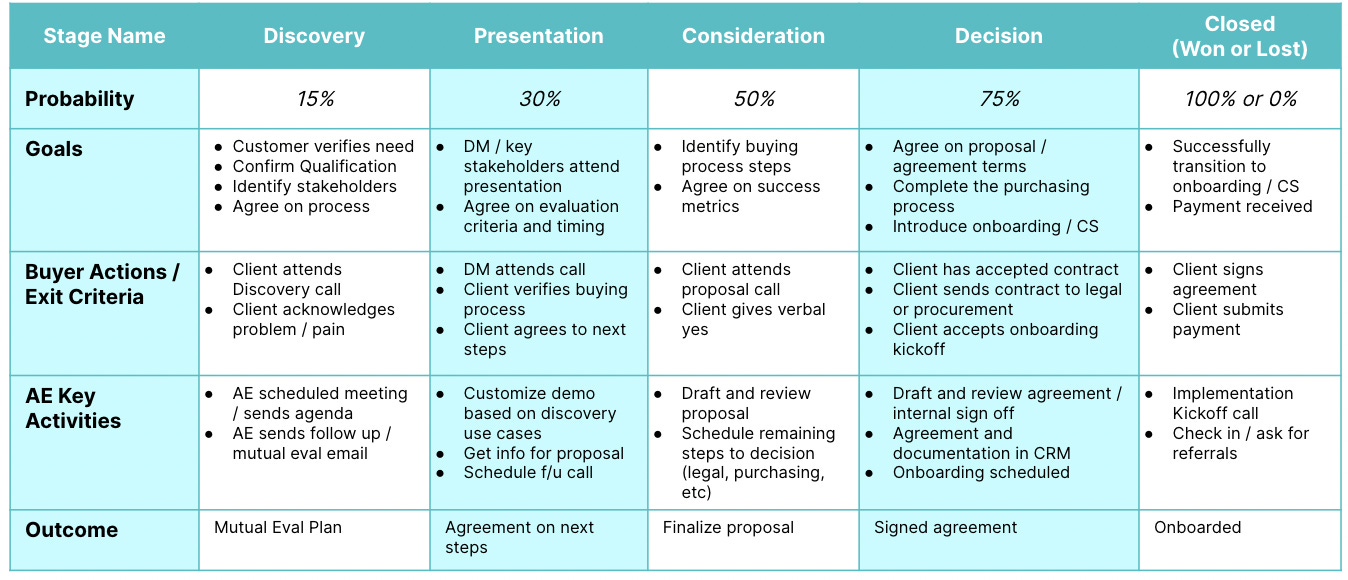
Tito highlights that many companies struggle because of a lack of clarity around qualification. He explains, “I’ve seen the best companies convert 73% of outbound intro calls into pipeline and the worst ones around 5%. The problem often lies in stage names and exit criteria, inbound versus outbound discovery, and whether the conversation is post-project or pre-project.”
If your team doesn’t have clear stage definitions and exit criteria, reps may celebrate meetings that were never going to move forward. By tightening those definitions, you create discipline and consistency in the funnel.
Here’s an example of what a well designed sales process with clear exit criteria might look like to get you started:
Step 3: Diagnose with a Scorecard
Another approach Tito recommends is using an outbound scorecard to bring consistency to call evaluations. Scoring each conversation against criteria such as uncovering the desired state, illuminating a better future state, and driving alignment on next steps makes it clear where the funnel is breaking down.
This moves the conversation away from anecdotes and toward measurable diagnosis. If half your team consistently struggles to surface a future state, you know exactly where to focus coaching.
Step 4: Translate Findings into Training
Once you’ve identified the patterns, build targeted enablement. For example:
If reps struggle to position use cases, run role-play sessions focused on storytelling.
If messaging is too broad, refine your ICP and discovery questions.
If buyers aren’t seeing urgency, coach reps on surfacing latent pain.
One final note: Tito warns that stage matters here. If you are under $1M in ARR and under 20 customers, there’s likely less meaningful data to work from and less need for exit criteria (that really matters as you onboard reps!). Instead, the focus should be on going deeper on what resonates with the market and learning to pitch the solution differently which means talk to customers. Tito advises “ask them to explain why they like the solution and what problem it solves for them as you want voice of customer to guide value-based messaging.”
The natural reaction will be to solve the challenge with volume and push for more meetings, but that’s not going to solve the down funnel challenge. Instead, create a system to understand what’s happening in those calls, tighten up definitions, and coach with intention.
Until next week!